Vaccination: which shots adults need
Immunity from childhood shots fades over time. Here's which vaccines matter for adults — by age, health, profession and travel.
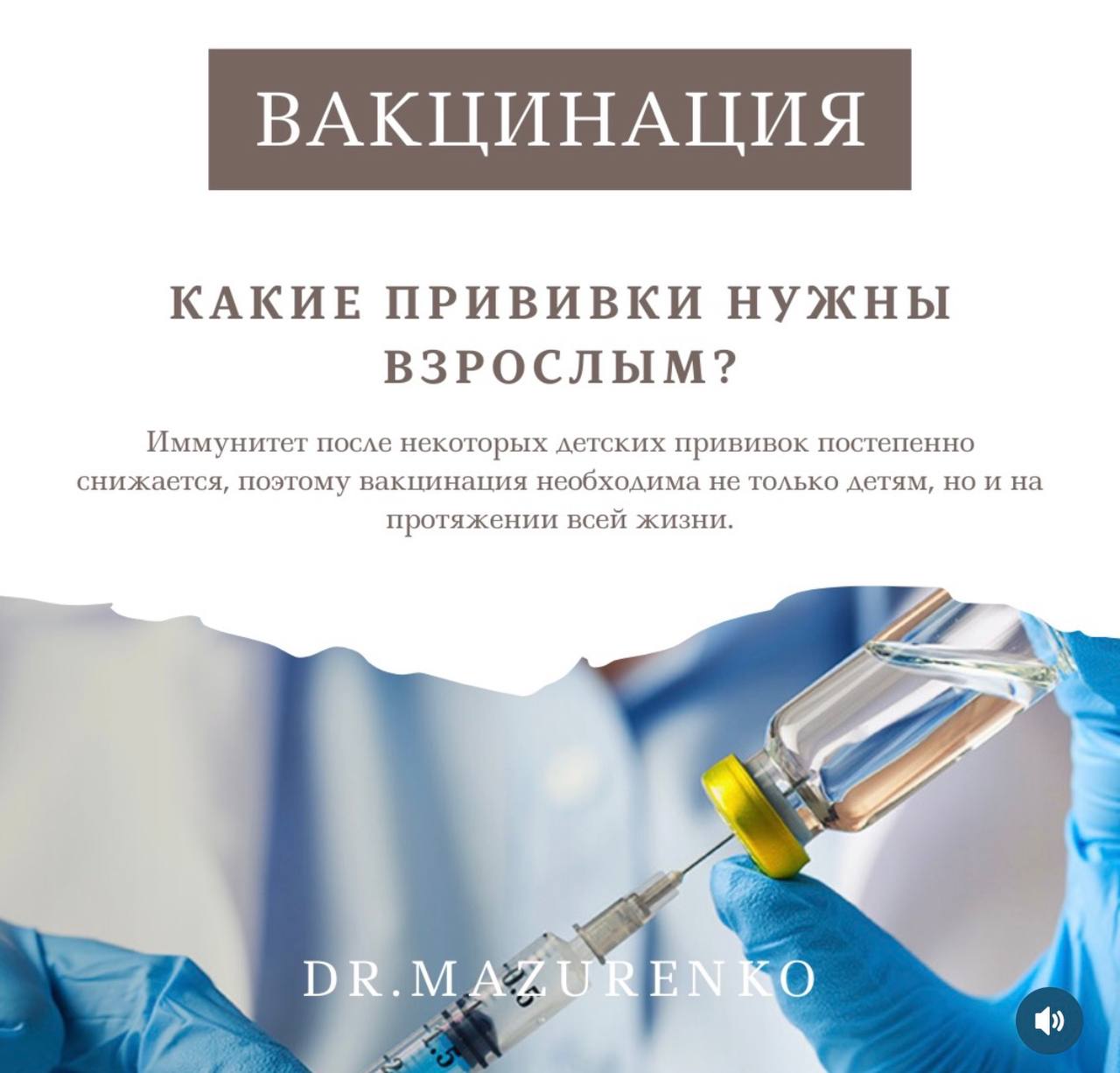
⚡ In short
- Immunity fades over time — vaccines are for adults too, not only children.
- Adult basics: Td/Tdap every 10 years, annual flu, COVID-19, hepatitis A and B, HPV.
- By age and risk: MMR, chickenpox, pneumococcus, shingles, RSV.
- Before travel, check the country's requirements on cdc.gov and plan with a doctor.
Immunity from some childhood shots declines over time, and a number of vaccines appeared much later and may not have been part of the national schedule. So vaccination matters not only in childhood but throughout life. Here's what is relevant for adults.
Routine vaccines for adults
Diphtheria, tetanus, pertussis (Td/Tdap)
Booster every 10 years: if you were last vaccinated at 16, the next is at 26, then 36, and so on. Especially important for healthcare workers, future parents and anyone in contact with newborns.
Influenza
Annual vaccination is recommended for all adults. Especially: people over 60–65, pregnant women, patients with chronic conditions, healthcare workers.
COVID-19
The need for a booster depends on age, health status and the current recommendations of your country of residence. Especially recommended for high-risk groups.
Hepatitis B
Recommended for all adults not previously vaccinated. A course of 3 doses on the standard 0–1–6 month schedule.
Hepatitis A
Recommended for travellers, people with chronic liver disease, food-industry workers, men who have sex with men, and people with an increased occupational risk. Before vaccination you can test IgG antibodies to hepatitis A: if they are present, immunity is already formed. A course of 2 doses.
Human papillomavirus (HPV)
The vaccine protects against most cases of cervical, vaginal and vulvar, penile, anal and oropharyngeal cancer, as well as genital warts. Maximum efficacy is achieved before the onset of sexual activity, but vaccination is useful for adults of any age. A course of 2–3 doses, with high efficacy even from a single dose.
Measles, rubella, mumps (MMR)
Recommended if there is no confirmed vaccination or past infection. It is best to test IgG antibodies to confirm immunity — especially before planning a pregnancy.
Chickenpox
Indicated if a person has neither had the disease nor been vaccinated. In adults it often runs a much more severe course than in children.
Pneumococcal infection
Recommended for everyone over 65, patients with chronic conditions and people with immunodeficiency.
Shingles (Herpes Zoster)
Recommended for people over 50. Significantly reduces the risk of shingles and its most severe complication — post-herpetic neuralgia.
Respiratory syncytial virus (RSV)
A relatively new vaccine. Recommended for older adults (usually after 60–75, depending on national guidance) and for pregnant women (where this strategy is approved) to protect newborns.
If you are planning to travel
Depending on the destination country, additional vaccines may be needed:
- yellow fever
- typhoid fever
- Japanese encephalitis
- rabies
- cholera
- meningococcal infection
It's convenient to check current country requirements on cdc.gov.
The bottom line
- ✓Adult vaccination is no less important than childhood vaccination: part of the immunity weakens over time
- ✓Together with a family doctor, assess your vaccination status and build an individual plan — by age, health, profession and travel
- ✓Vaccination remains one of the most effective, evidence-based ways to prevent infections, severe complications and premature death
Sources
- CDC — Adult Immunization Schedule
- WHO — Immunization, Vaccines and Biologicals
- CDC Yellow Book — for travellers
This material is for educational purposes and does not replace a medical consultation. Build your individual vaccination plan with a family doctor.